Call Us! (952) 469-6700

Traffic Control
Effective traffic control is essential for ensuring the safety and efficiency of roadways during construction, maintenance, or special events. It involves the strategic planning and implementation of measures to direct vehicles and pedestrians safely around work zones. Safety Signs invests heavily in advancing technology in the industry while we experiment with current devices and slight alterations to track items, remotely control boards, and more.
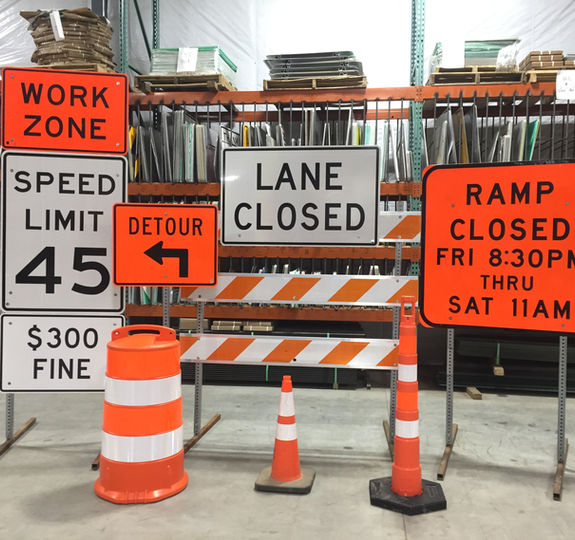
Traffic Control Devices
Safety Signs, LLC offers a full line of traffic control equipment and accessories available for rental, subcontract, and purchase. We can fabricate custom or MUTCD signs in our sign fabrication shop.
We answer our phones, deliver, install, maintain and remove Traffic Control devices 24 hours a day, 365 days per year.
Devices Include:
-
construction signs
-
permanent signage
-
barricades - type 1, type 2, type 3
-
cones, delineators, drums and grabbers
-
message boards
-
arrow boards
-
impact attenuators
-
and many more

Traffic Control Services
From large scale, multi-year projects to small one-day projects, we have the right equipment, devices to make sure your work zone is safe. From the initial consultation and plan design to the completion of the project, we'll ensure your work zone is safe and compliant.
We answer our phones, deliver, install, maintain and remove Traffic Control devices 24 hours a day, 365 days per year.
Service Include:
-
traffic control consulting
-
traffic control plan design
-
lane closures
-
flagging services
-
detours
-
traffic control for special events
-
smart work zone systems
-
work zone maintenance and inspections
TPAR Temporary Pedestrian Access Routes
APR Alternative Pedestrian Routes
Properly designed pedestrian detours ensure that people can navigate safely around work zones avoiding vehicular traffic and any unnecessary risk. Our team plans and implements clear and accessible detour routes, complete with signage and barriers, to guide pedestrians safely and efficiently. We prioritize accessibility and compliance with local regulations to ensure a smooth and safe passage for all pedestrians.
Accommodating Pedestrians in Work Zones
Temporary Pedestrian Access Route (TPAR)
A TPAR is a temporary pedestrian route that is fully accessible and meets the standards and principles of Pedestrian Right-Of-Way Accessibility Guidelines (PROWAG). TPAR devices are pedestrian elements (such as temporary curb ramps, pedestrian channelizers, sidewalk barricades, etc.) that meet the parameters defined in PROWAG.
Alternate Pedestrian Routes (APR)
An APR is a temporary pedestrian facility created to replace a pedestrian facility impacted by a work zone. The APR must contain accessibility features consistent with the features present in the impacted pedestrian facility.
More Information & Layout notes:


